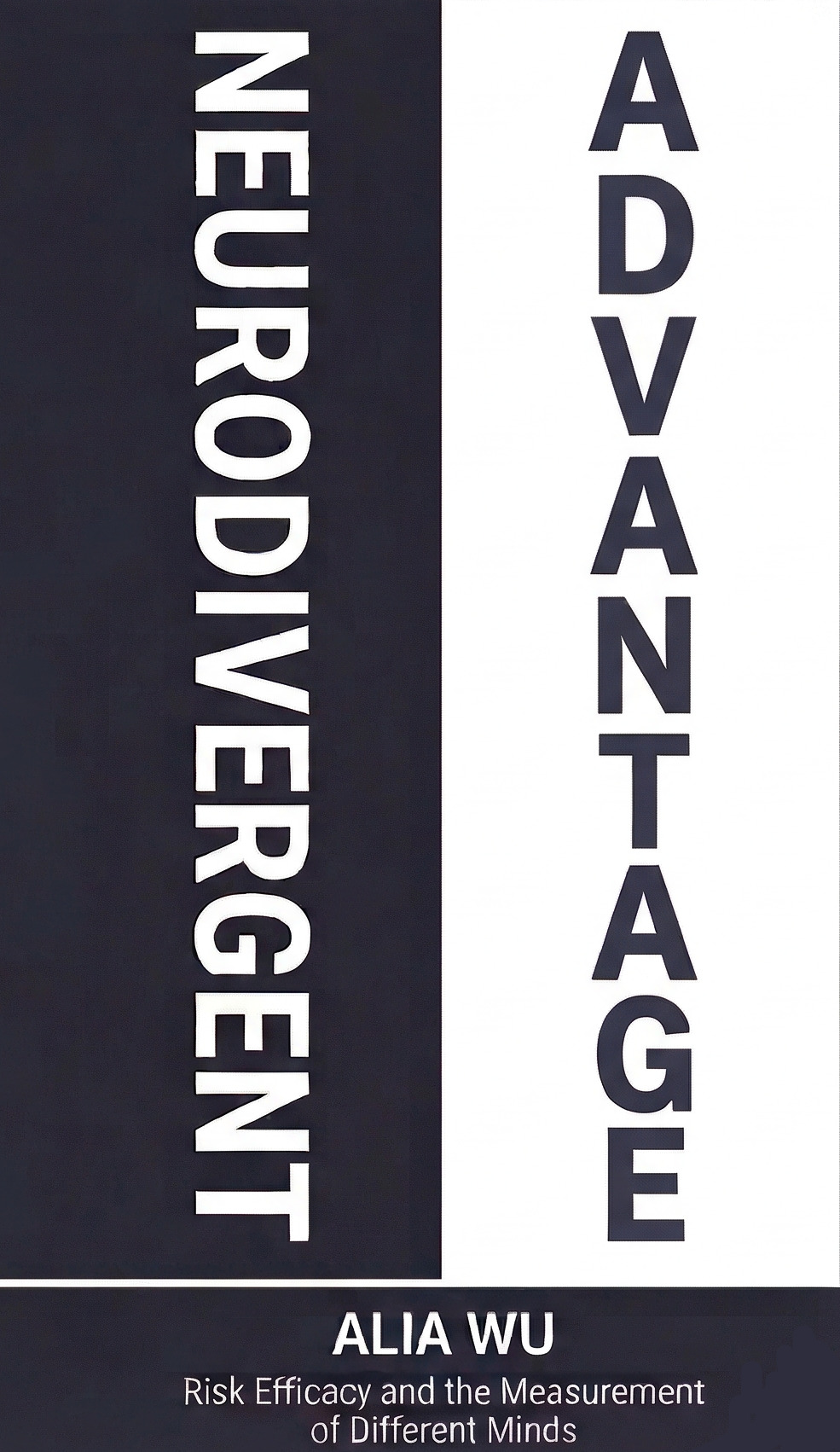
The Neurodivergent Advantage
Redesigning Talent Systems for Exceptional Minds
If Book One established what to measure, Book Two asks a more uncomfortable question: who are we systematically mismeasuring, and what do we lose when we get it wrong? The answer involves 15-20% of humanity whose cognitive architecture our talent systems consistently misread.
Autistic individuals whose deep, systematic pattern recognition gets coded as "inflexibility." People with ADHD whose rapid environmental scanning and crisis-mode excellence gets coded as "inconsistency." Dyslexic thinkers whose holistic spatial reasoning and narrative synthesis gets coded as "slow processing." Twice-exceptional individuals whose extraordinary peaks and challenging valleys cancel each other out in averaging systems, rendering them invisible.
These are not marginal populations. They include a disproportionate share of the people who have historically produced breakthrough innovations, identified risks others missed, and solved problems that defeated conventional approaches. And they are being filtered out (systematically, reliably, at scale) by the very systems that claim to be meritocratic.
This book maps each major neurodivergent condition onto the four Risk Efficacy™ pillars, revealing not deficits but distinctive signatures: characteristic patterns of strength and vulnerability that, when properly understood, can be matched to environments, roles, and teams where they produce exceptional value.
The shift, from accommodation to architecture, from deficit to signature, from filtering to matching, is what moves organizations from asking "How do we accommodate this person's limitations?" to "Where does this person's cognitive architecture produce its best decisions?"
What's Inside
The Neurotypical Default
How every evaluation system encodes assumptions about what 'normal' cognition looks like.
The Cost of Filtering
What organizations and societies lose when neurodivergent talent gets systematically screened out.
The Autism Spectrum Signature
Deep systematic processing, calibration advantages, and narrow-but-exhaustive informed navigation.
The ADHD Signature
Rapid environmental scanning, crisis-mode excellence, and novelty-driven pattern detection.
The Dyslexia Signature
Holistic spatial reasoning, narrative synthesis, and big-picture pattern recognition.
Additional Signatures
Tourette syndrome, OCD, giftedness, twice-exceptionality, and co-occurrence patterns.
Signature Complementarity
How different cognitive architectures pair to produce balanced team-level Risk Efficacy™.
Redesigning Assessment
Evaluation systems that measure capability signatures rather than neurotypical conformity.
Team Composition Frameworks
Building cognitively diverse teams matched by complementary Risk Efficacy™ profiles.
Educational Infrastructure
Redesigning learning environments to develop rather than filter neurodivergent capability.
The Cultural Shift
Moving organizations from accommodation to architecture in how they think about cognitive difference.